

Recombinant Human BMP-6


Data
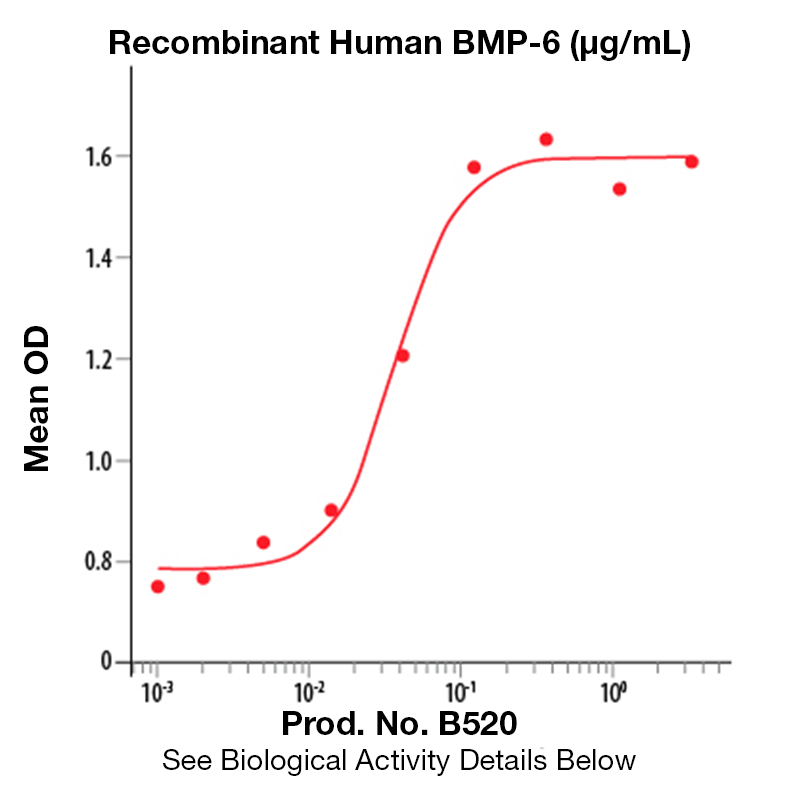
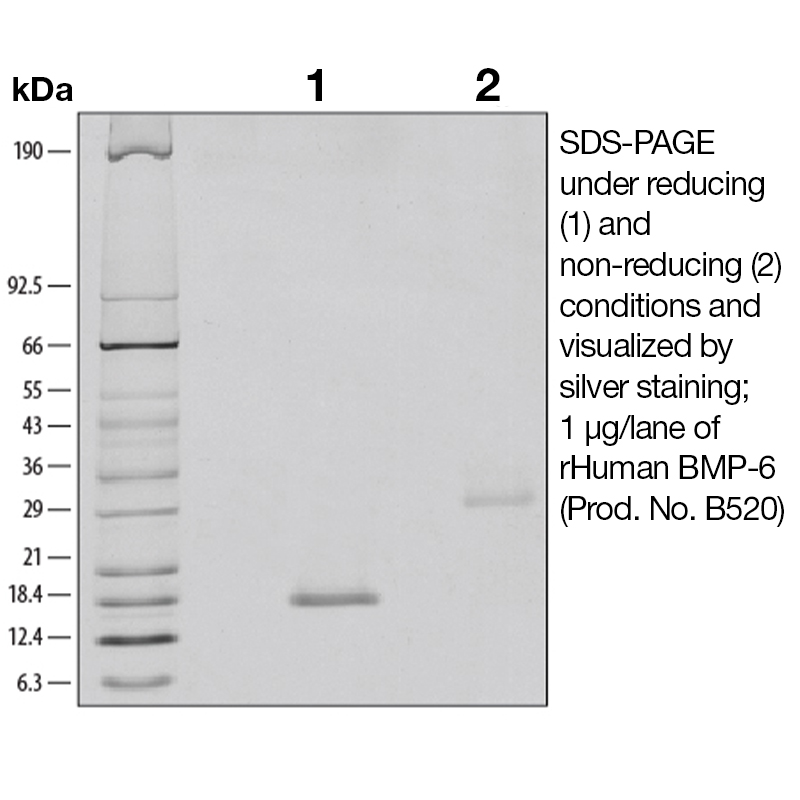
BackgroundBone morphogenetic protein 6, also known as BMP6, is a human gene. The protein encoded by this gene is a a member of the TGFβ superfamily. Bone morphogenetic proteins are known for their ability to induce the growth of bone and cartilage. BMP6 is able to induce all osteogenic markers in mesenchymal stem cells. The bone morphogenetic proteins (BMPs) are a family of secreted signaling molecules that can induce ectopic bone growth. Many BMPs are part of the transforming growth factor-beta (TGFB) superfamily. BMPs were originally identified by an ability of demineralized bone extract to induce endochondral osteogenesis in vivo in an extraskeletal site. Based on its expression early in embryogenesis, the BMP encoded by this gene has a proposed role in early development. In addition, the fact that this BMP is closely related to BMP5 and BMP7 has led to speculation of possible bone inductive activity. Protein DetailsPurity >95% by SDS-PAGE and analyzed by silver stain. Endotoxin Level <0.1 EU/µg as determined by the LAL method Biological Activity The biological activity of Human BMP-6 was determined by it ability to induce alkaline phosphatase expression by ATDC5 chodrogenic cells. The expected ED<sub>50</sub> for this effect is 0.05 - 0.15 μg/ml. Protein Accession No. Amino Acid Sequence qqsrnrstq sqdvarvssa sdynsselkt acrkhelyvs fqdlgwqdwi iapkgyaany cdgecsfpln ahmnatnhai vqtlvhlmnp eyvpkpccap tklnaisvly fddnsnvilk kyrnmvvrac gch N-terminal Sequence Analysis Gln382 State of Matter Solution Predicted Molecular Mass Recombinant Human BMP-6 is a homodimeric protein consisting of two 132 amino acid chains. The predicted molecular weight of each monomer is Mr 15 kDa. However due to glycosylation, the actual molecular weight of the doublet as observed by migration on SDS Page under reducing conditions is Mr 18 and 23 kDa. Predicted Molecular Mass 15 Formulation This recombinant protein is a 0.2 μm filtered solution in 50% acetonitrile (CH3CN), 0.1% trifluoroacetic acid (TFA) containing 20 μg of rhBMP-6 at a concentration of 0.472 mg/ml. Storage and Stability Working aliquots of this recombinant protein solution are stable for up to twelve months at -20°C to -70°C in a manual defrost freezer. Upon thawing, in the presence of a carrier protein, this recombinant protein can be stored at 2° - 8°C for one month without detectable loss of activity. For long-term storage, aliquot and freeze at -20°C to -70°C in a manual defrost freezer. Avoid repeated freeze thaw cycles. Country of Origin USA Shipping Next Day Ambient NCBI Gene Bank Leinco Protein AdvisorPowered by AI: AI is experimental and still learning how to provide the best assistance. It may occasionally generate incorrect or incomplete responses. Please do not rely solely on its recommendations when making purchasing decisions or designing experiments. Recombinant Human Bone Morphogenetic Protein-6 (rhBMP-6) is a powerful tool for research applications due to its well-documented roles in bone formation, tissue regeneration, and modulation of cellular processes. Here are key reasons why you should consider using rhBMP-6 in your research: 1. Osteoinductive and Bone-Forming Activity
2. Versatility in Tissue Engineering
3. Autologous and Safe Carrier Compatibility
4. Regulation of Multiple Cellular Pathways
5. High Purity and Bioactivity
6. Therapeutic and Translational Relevance
7. Well-Characterized and Widely Used
In summary, recombinant human BMP-6 is a versatile, potent, and well-characterized protein that can significantly enhance research in bone biology, tissue engineering, regenerative medicine, and related fields. Its ability to drive osteogenesis, modulate cellular responses, and integrate with autologous delivery systems makes it an excellent choice for a wide range of experimental applications. You can use recombinant human BMP-6 as a standard for quantification or calibration in your ELISA assays, but only if the ELISA kit or assay protocol is specifically validated for recombinant BMP-6 and the recombinant protein is of high purity and properly quantified. Not all ELISA kits are compatible with recombinant standards, and some are designed to detect only native BMP-6. Key considerations:
Best Practices:
Summary Table: Recombinant BMP-6 as ELISA Standard
Conclusion: Recombinant Human BMP-6 has been validated for several key applications in published research: Bone and Skeletal ApplicationsRecombinant human BMP-6 (rhBMP-6) demonstrates robust osteoinductive capabilities. It has been validated for bone formation and restoration, particularly in treating osteoporosis, where systemic administration can restore bone in animal models. The protein induces bone formation through activation of the IGF-I and EGF signaling pathways. Additionally, rhBMP-6 can induce all osteogenic markers in mesenchymal stem cells, making it valuable for bone regeneration applications. Functional and Bioactivity AssaysThe protein has been validated for use in blocking assays and functional assays. Bioactivity is commonly measured through its ability to induce alkaline phosphatase production by chondrogenic cell lines. The protein has demonstrated biological activity in cell-based assays using mouse C2C12 myoblast cells transfected with BMP Response Elements-Luciferase constructs. Tissue Engineering and Regenerative Medicine ApplicationsrhBMP-6 holds validated applications in tissue engineering and regenerative medicine, with particular promise in cartilage regeneration and wound healing. It has been evaluated in preclinical models for orthopedic applications including delayed and nonunion fractures, lumbar interbody fusion, and segmental bone defects. Signaling and Molecular StudiesThe protein has been used in research examining its interactions with BMP coreceptors and its role in iron homeostasis through Hepcidin expression regulation. It has also been studied for its neuroprotective functions in brain injury contexts. These applications span from basic research assays to advanced tissue engineering and regenerative medicine approaches, demonstrating the versatility of recombinant BMP-6 as a research tool. To reconstitute and prepare Recombinant Human BMP-6 protein for cell culture experiments, dissolve the lyophilized protein in a suitable acidic buffer with carrier protein to minimize adsorption and maintain stability. The following protocol is widely recommended for BMP-6:
Key considerations:
Summary Table: BMP-6 Reconstitution Protocol
This protocol ensures optimal solubility, stability, and bioactivity of recombinant human BMP-6 for cell culture applications. References & Citations1. Vukicevic, S. et al. (2006) J Biol Chem. 281(35):25509-21. 2. Gruber, R. et al. (2006) J Periodontol. 77(4):699-706. 3. Guilak, F. et al. (2006) Arthritis Rheum. 54(4):1222-32. 4. Goldschmeding, R. et al. (2006) Diabetologia. 49(5):1039-48. 5. Makino, H. et al. (2006) Endocrinology. 147(6):2681-9. 6. Offenbacher, S. et al. (2006) Clin Oral Implants Res. 17(1):38-47. Certificate of AnalysisIMPORTANT Use lot specific datasheet for all technical information pertaining to this recombinant protein. |
Related Products
 Products are for research use only. Not for use in diagnostic or therapeutic procedures.
