Antibody Modification
Introduction
At Leinco Technologies, we offer a wide range of antibody modification services to meet the diverse needs of our clients. Our expertise in antibody engineering and production allows us to provide high-quality, customized antibodies for various research and diagnostic applications. Whether you require antibody fragmentation services, chimerization, or precise mutation, our team provides tailored solutions for both small and large-scale needs
Fab Fragments
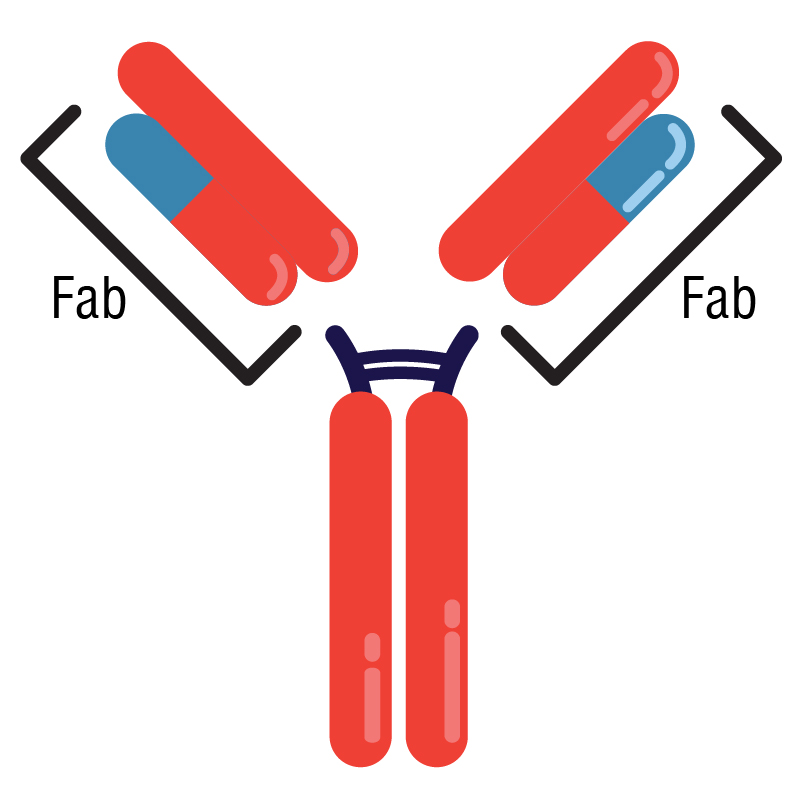
Fab fragments are antigen-binding fragments of antibodies that consist of one constant and one variable domain of each of the heavy and light chains. These fragments retain the ability to bind to specific antigens but lack the Fc region, which is responsible for effector functions such as complement activation and antibody-dependent cell-mediated cytotoxicity.
Advantages of Fab fragments
Fab2 Fragments
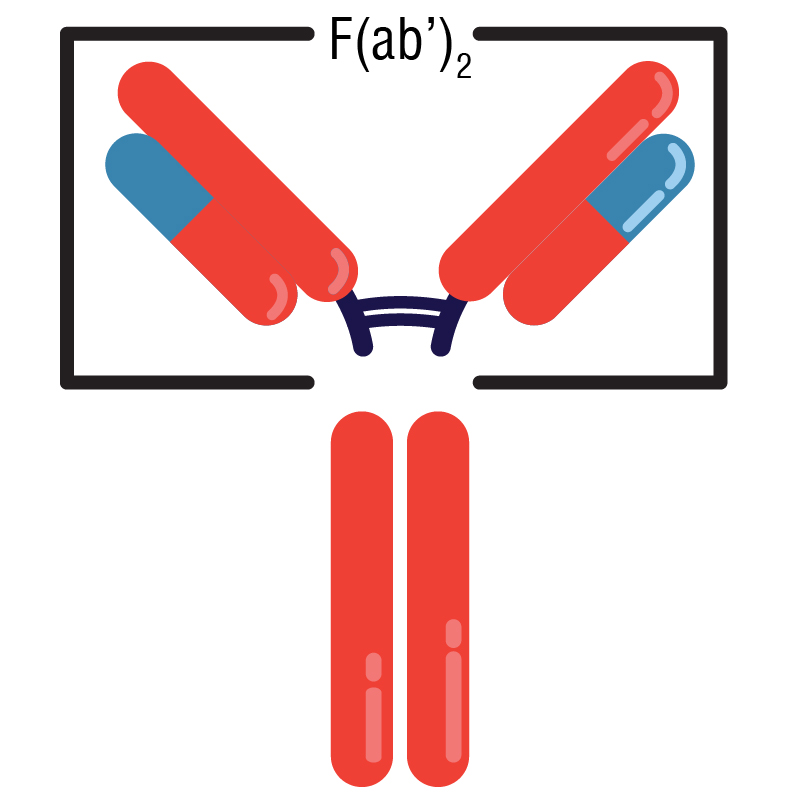
Fab2 fragments (also known as F(ab’)2) are similar to Fab fragments but are distinguished by containing two antigen-binding sites. This bivalent structure is formed by two Fab regions linked together by disulfide bonds.
By retaining both binding sites while lacking the Fc region, these fragments offer several strategic advantages for complex assays:
- Increased Avidity: They provide significantly higher avidity and improved binding to antigens compared to monovalent Fab fragments.
- Bivalent Binding: They are the ideal solution for applications requiring bivalent binding without the interference of antibody-mediated effector functions.
- Superior Assay Performance: In techniques such as Immunohistochemistry (IHC) and flow cytometry, using Fab2 fragments helps reduce non-specific binding and facilitates better tissue penetration.
- Precise Cell Labeling: They allow for the labeling of specific cell populations in flow cytometry without inducing unwanted cell activation or depletion.
Chimeric Antibodies
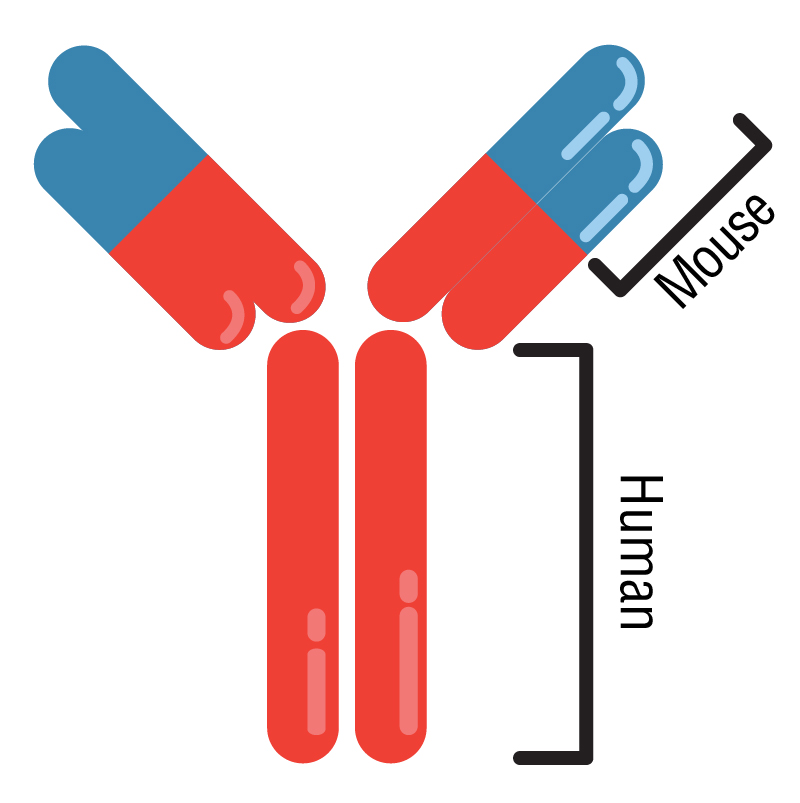
Chimeric antibodies are engineered antibodies that combine the variable regions of an antibody from one species with the constant regions of an antibody from another species. This custom antibody engineering approach combines the antigen-binding specificity of one species with the effector functions of another. Explore our off the shelf chimeric antibodies, mAbMods™.
Advantages of Chimeric Antibodies
Antibody Fc Mutations
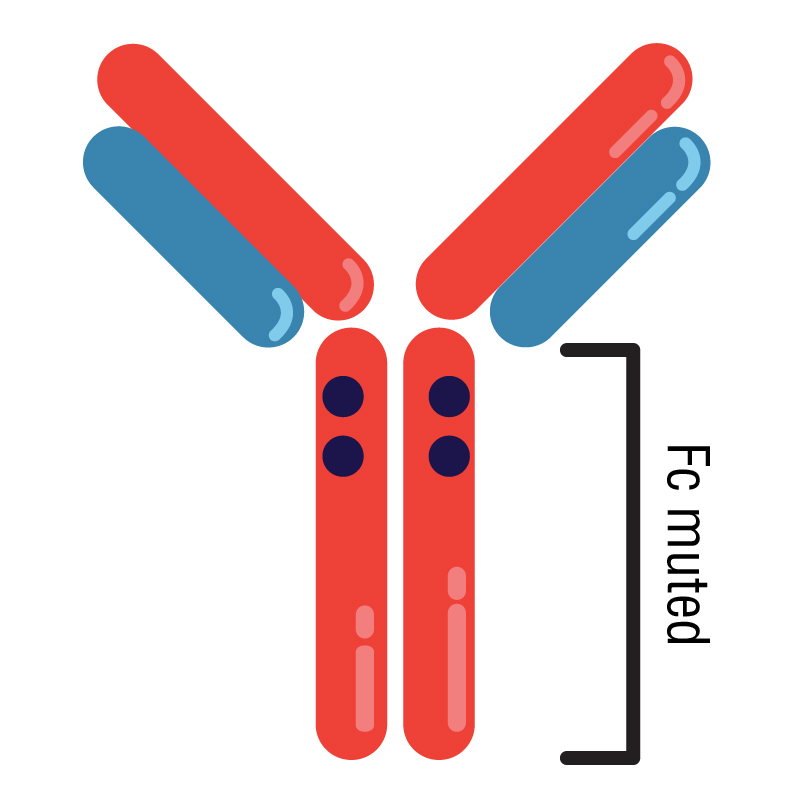
Antibody Fc mutations involve altering the amino acid sequence of the Fc region of an antibody to modulate its effector functions. This approach can be used to enhance or reduce ADCC, complement activation, or Fc receptor binding. For precise control over effector function, see our Fc Muted™ technologies.
Advantages of Fc mutations
Applications of Antibody Modification
Custom antibody modification services are essential for tailoring protein performance to the specific requirements of research, diagnostic, and therapeutic frameworks. By altering the structural or genetic makeup of an antibody, researchers can achieve more precise data and better clinical outcomes.
Immunohistochemistry (IHC)
In IHC, the primary goal is clear visualization of antigens within complex tissue architectures.
- Enhanced Tissue Penetration: Because Fab fragments and F(ab’)2 fragments are significantly smaller than whole IgG molecules, they can penetrate dense tissues more effectively.
- Reduced Background: By removing the Fc region, these fragments eliminate non-specific binding to endogenous Fc receptors, resulting in a much higher signal-to-noise ratio.
Flow Cytometry
Antibody modification is a critical tool for immunophenotyping and cell analysis.
- Minimal Cell Interference: Using Fab or Fab2 fragments allows for the labeling of specific cell populations without triggering unwanted biological responses.
- Preventing Activation: These modifications ensure that the antibody binds to the target antigen without inducing cell activation or depletion that might otherwise be caused by Fc-mediated effector functions.
Therapeutic Antibody Development
For clinical applications, the focus shifts to safety and efficacy through advanced engineering.
- Optimized Effector Functions: Through Fc mutations, developers can fine-tune Antibody-Dependent Cellular Cytotoxicity (ADCC) and complement activation to either enhance or reduce the immune response.
- Humanization and Chimerization: Chimeric antibodies are utilized to reduce immunogenicity in human patients by combining murine variable regions with human constant regions, improving the drug’s safety profile.
Diagnostic Assay Optimization
Improving the reliability of in vitro diagnostics (IVD) often requires specialized antibody formats.
- Reduce Non-Specific Binding: Modifications can be used to eliminate cross-reactivity and improve the sensitivity of various diagnostic assays.
- Custom Conjugations: Utilizing modified fragments ensures that labeling molecules (like biotin or fluorescent reporters) do not interfere with the primary binding site.