

Anti-V5 Antibody, HRP conjugate (18870P)


Data
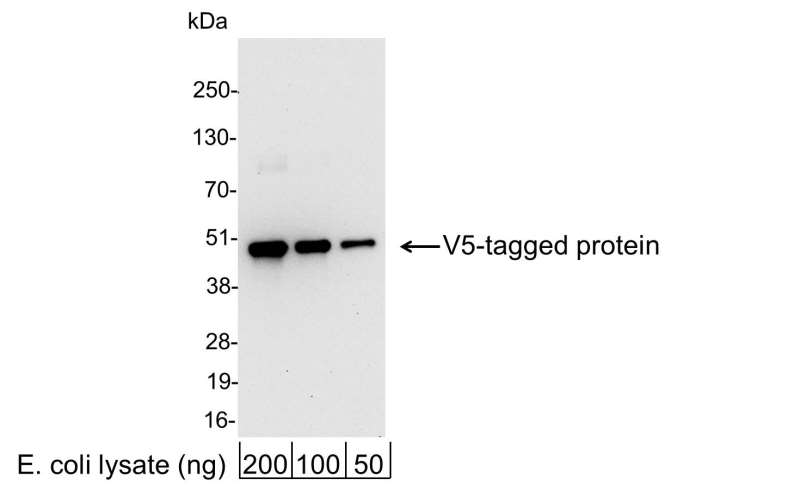 Detection of V5-tagged Protein by western blot. Samples: 200|100|or 50 ng of E. coli whole cell lysate expressing a multi-tag fusion protein. Antibodies: Affinity-purified, HRP-conjugated, rabbit anti-V5 antibody 18870P used for WB at 0.2 µg/ml (1:5,000). Detection: Chemiluminescence with an exposure time of 30 seconds.
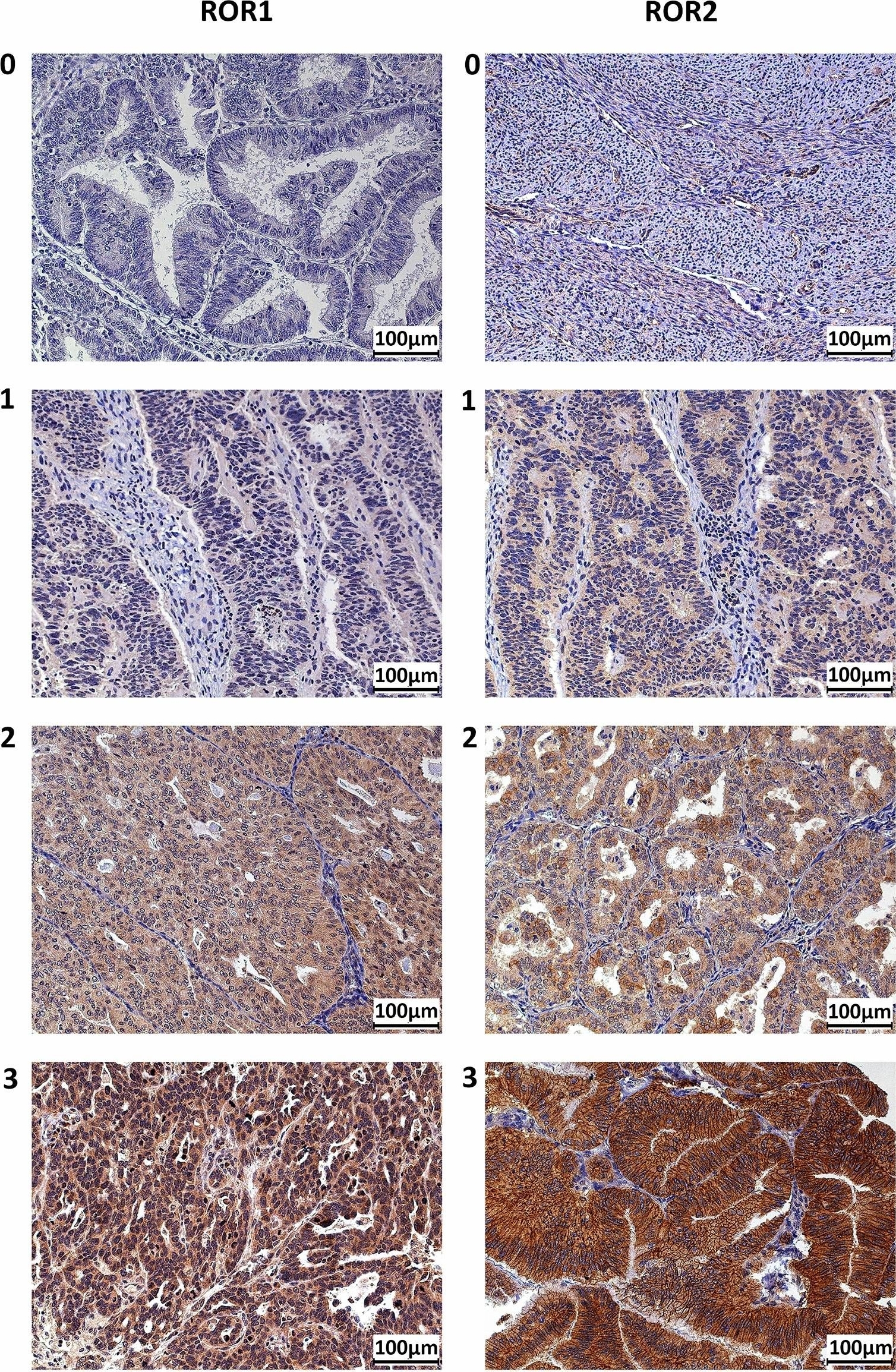 ROR1 and ROR2 protein expression as measured by immunohistochemistry. Representative images of score 0 (absence), 1 (weak), 2 (moderate), 3 (intense) for both ROR1 and ROR2.
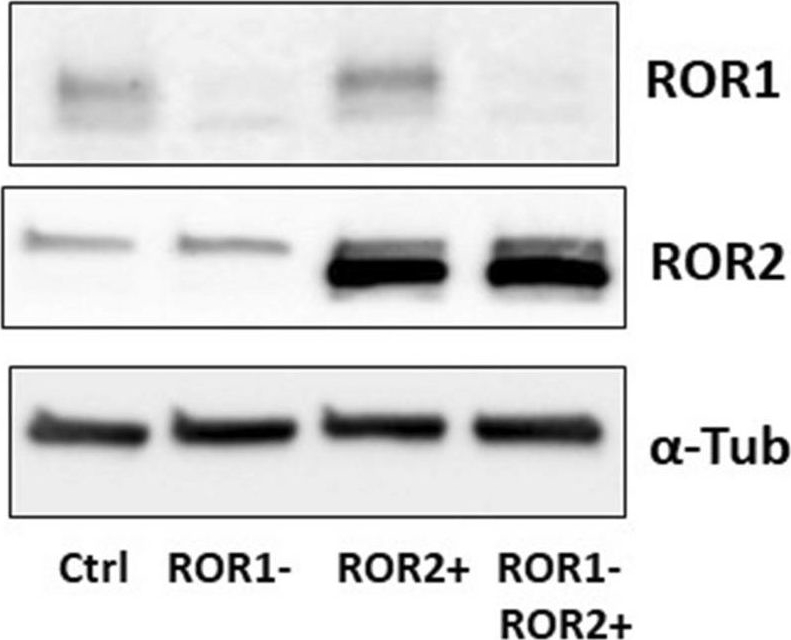 ROR1 knockdown and ROR2 overexpression significantly decreased proliferation and migration of KLE. (A) ROR1 mRNA expression level was reduced significantly without changing ROR2 following single ROR1 siRNA transfection. ROR2 mRNA expression level was elevated significantly with no changes in ROR1 mRNA level following single ROR2 plasmid transfection. Co-transfecting ROR1 siRNA and ROR2 plasmid significantly reduced ROR1 while increased ROR2 at mRNA level. (B) Representative western blot membranes showed effective delivery of ROR1 siRNA and/or ROR2 plasmid in KLE. (C) ROR1 knockdown and ROR2 overexpression significantly reduced the cell proliferation after 48h and 72h (p=0.043 and 0.004 respectively). (D): ROR1 knockdown and/or ROR2 overexpression had no effect on adhesion to collagen or fibronectin. (E): ROR1 knockdown and ROR2 overexpression decreased KLE migration ability significantly (p=0.037). (F) No significant change was observed for invasion following ROR1 knockdown and/or ROR2 overexpression. For all panels n=3, error bars represent standard deviation of the mean, *p<0.05.
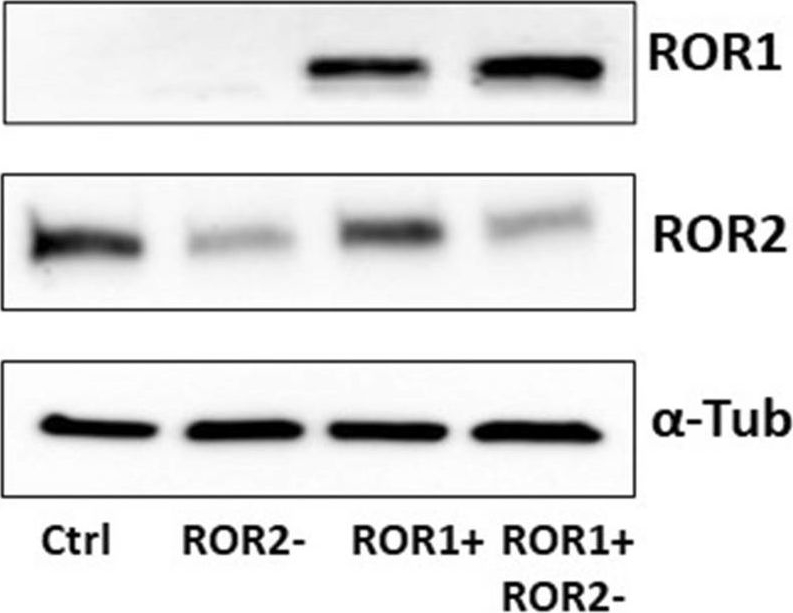 ROR1 overexpression and ROR2 knockdown play different roles in MFE-296. (A) ROR2 mRNA level was reduced significantly without changing ROR1 following single ROR2 siRNA transfection. ROR1 mRNA level was increased significantly with no change in ROR2 following single ROR1 plasmid transfection. Co-transfecting ROR2 siRNA and ROR1 plasmid significantly reduced ROR2 while increased ROR1 at mRNA level. (B) Representative western blot membranes showed effective delivery of ROR2 siRNA and/or ROR1 plasmid in MFE-296. (C) No significant change of proliferation was observed after 48h or 72h following ROR1 overexpression and/or ROR2 knockdown. (D) ROR2 knockdown and/or ROR1 overexpression had no effect on adhesion to collagen or fibronectin. (E) ROR1 knockdown and/or ROR2 overexpression did not change MFE-296 cell migration significantly. (F) No significant change was observed for invasion following ROR2 knockdown and/or ROR1 overexpression. For all panels n=3, error bars represent standard deviation of the mean, *Significant at p<0.05.
 - -
- -
Antibody DetailsProduct DetailsHost Species Rabbit Immunogen Synthetic peptide corresponding to aa 95-108 (GKPIPNPLLGLDST) of RNA polymerase alpha subunit of simian virus 5 conjugated to KLH. Product Concentration 1.0 mg/ml Formulation Phosphate Buffered Saline (PBS) containing 0.2% BSA and 0.05% Pro-Clean 400. Molar enzyme/antibody ratio = 4:1. State of Matter Liquid Product Preparation Purified by peptide immuno-affinity chromatography Storage and Handling This antibody is stable for at least one (1) year at 2-8°C. Country of Origin USA Shipping Next Day 2-8°C Applications and Recommended Usage? Quality Tested by Leinco Immunoblotting: use at a dilution of 1:1,000- 1:30,000.
Immunocytochemistry: use at a dilution of 1:200-1:500 ELISA: use at a dilution of 1:10,000- 1:100,000 These are recommended dilutions. Endusers should determine optimal dilutions for their applications. Each investigator should determine their own optimal working dilution for specific applications. See directions on lot specific datasheets, as information may periodically change. DescriptionSpecificity Rabbit Polyclonal Antibody specific to V5. Background The V5 epitope tag represents aa 95-108 (GKPIPNPLLGLDST) derived from RNA polymerase alpha subunit of simian virus 5. Antigen DetailsResearch Area Epitope Tag References & CitationsTsurumi A et al. 2011. PLoS Genetics 7: e1002086. Xia F et al. 2008. BloS Biology 6: e128. STAT is an essential activator of the zygotic genome in the early Drosophila embryo. PLoS Genet (2011) [21637778] Technical Protocols ICC   |
 Products are for research use only. Not for use in diagnostic or therapeutic procedures.
