Critial Reagent-Level Decisions Behind Reproducible B-Cell Activation
Reagent choices that seem routine can determine whether a B-cell activation protocol succeeds or fails at scale. Our latest whitepaper examines variables in depth, with parameters and guidance you can apply to your workflow.
Topics covered include:
CD40 Clustering Requirement
A soluble CD40L trimer alone is insufficient for productive CD40 activation, which requires six or more receptors to cluster. Reagent format, whether multimerized recombinant CD40L or agonistic anti-CD40 antibody, determines whether that threshold is met.
IL-4 Dose-Response Trade-Off
IL-4 drives IgG1 and IgE class-switch recombination but is also cytostatic, demanding careful dose selection to balance both switching efficiency and viable cell recovery.
Endotoxin Arithmetic
Highly sensitive to trace endotoxin, primary B cells respond through the same NF-κB and MAPK pathways as CD40 signaling, requiring calculation against working concentration.
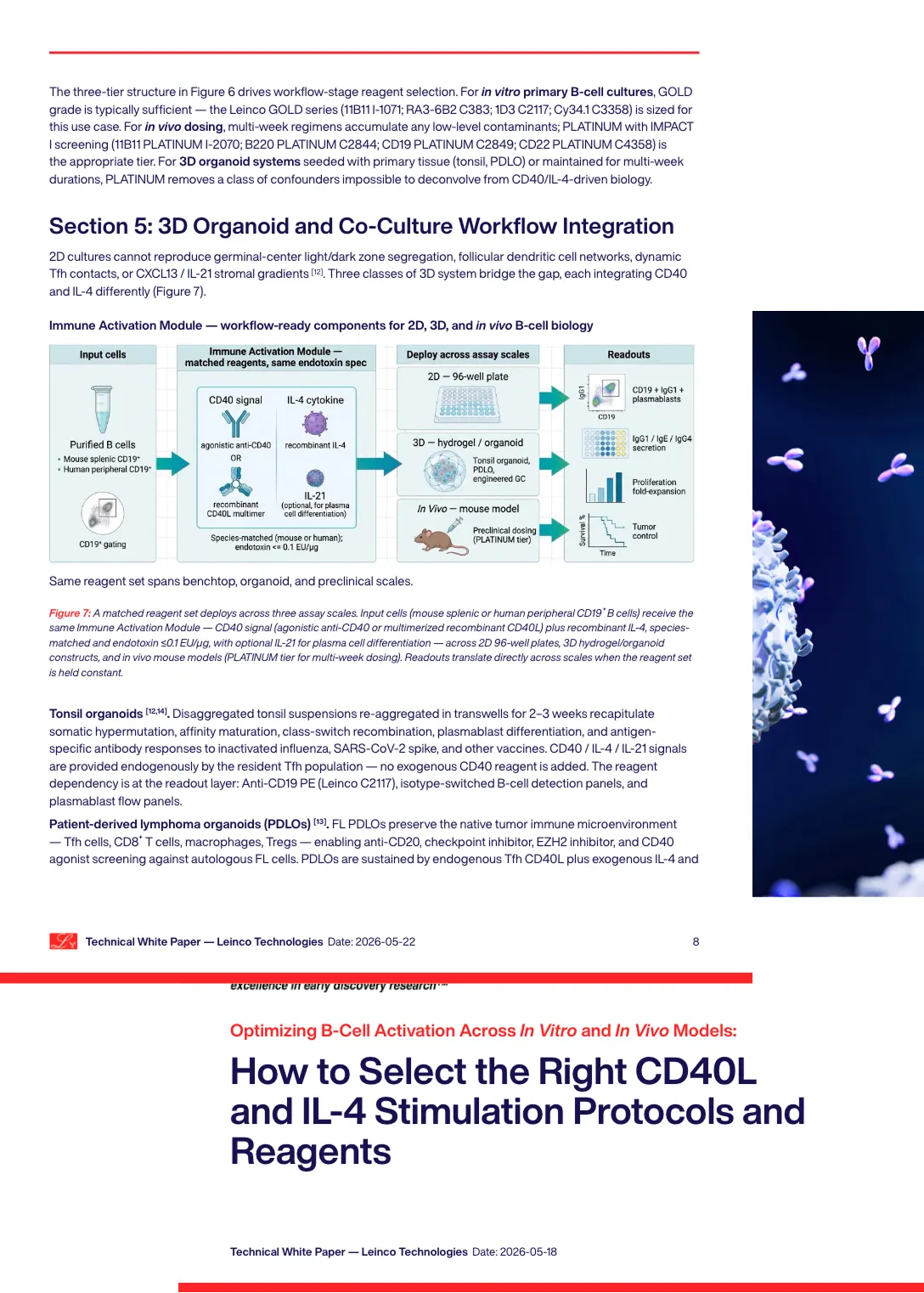
Scale Across In Vitro, Organoid, and In Vivo B-Cell Workflows
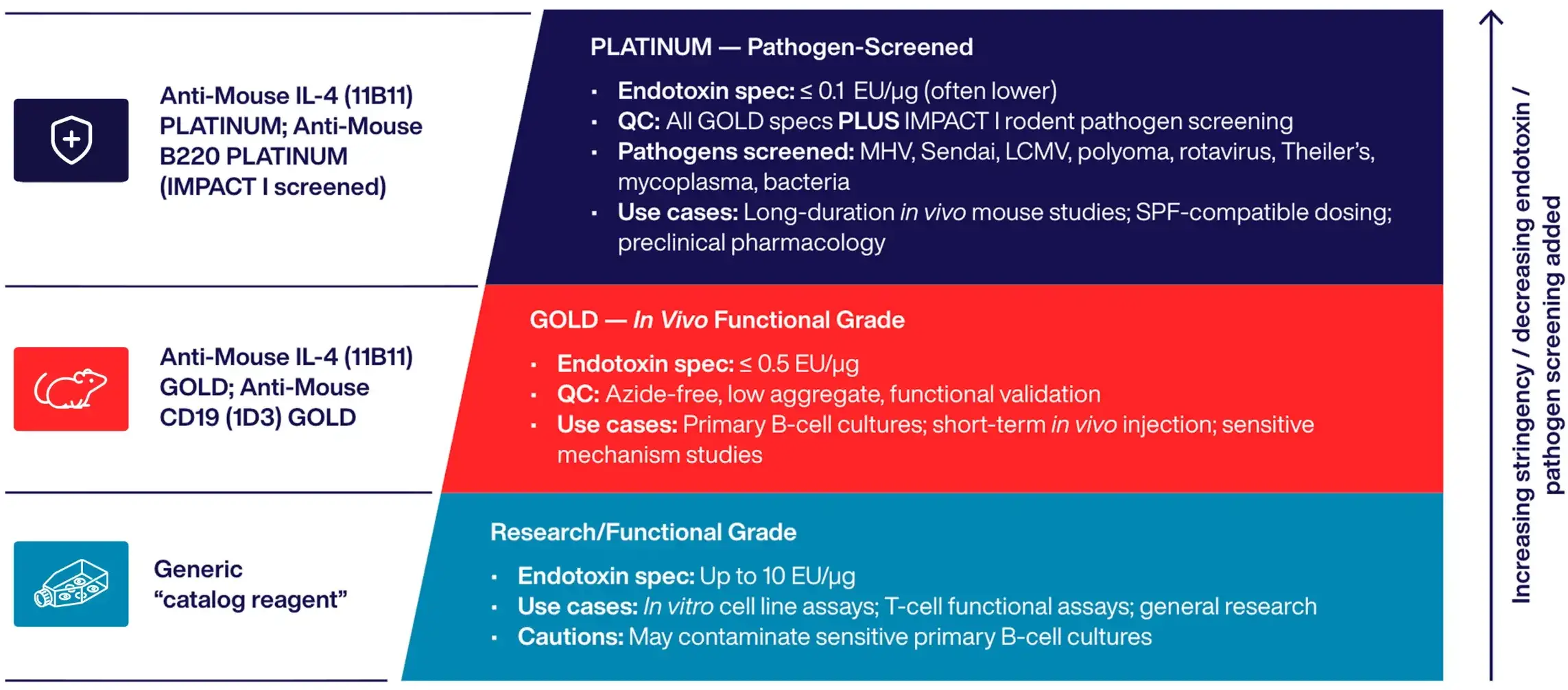
Take the whitepaper’s framework to the bench with Leinco’s matched-grade B-cell reagents. Build reliable, transferable B-cell activation across 2D plates, 3D organoids, and preclinical mouse models. GOLD (in vivo functional grade) reagents support primary B-cell cultures and short-term in vivo work; PLATINUM (pathogen-screened, ≤0.1 EU/µg) reagents support multi-week mouse studies, tonsil organoids, and patient-derived lymphoma organoids.
Reagent quality tiers for B-cell research and in vivo studies
Featured products include