



Data
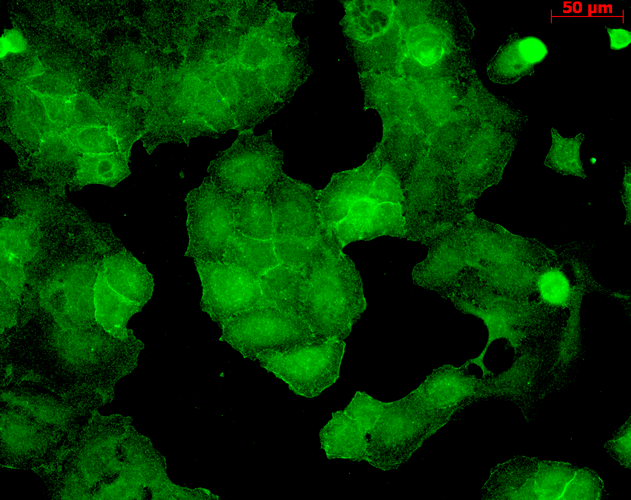 Immunocytochemistry/Immunofluorescence analysis using Mouse Anti-PSD95 Monoclonal Antibody, Clone 6G6 (56452). Tissue: HaCaT cells. Species: Human. Fixation: Cold 100% methanol for 10 minutes at -20°C. Primary Antibody: Mouse Anti-PSD95 Monoclonal Antibody (56452) at 1:100 for 1 hour at RT. Secondary Antibody: FITC Goat Anti-Mouse (green) at 1:50 for 1 hour at RT. Localization: Junction staining.
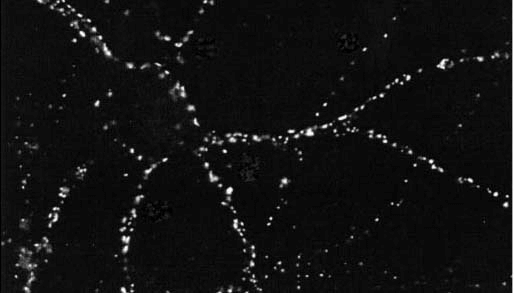 Immunocytochemistry/Immunofluorescence analysis using Mouse Anti-PSD95 Monoclonal Antibody, Clone 6G6 (56452). Tissue: dissociated hippocampal neurons. Species: Rat. Fixation: Cold 4% paraformaldehyde/0.2% glutaraldehyde in 0.1M sodium phosphate buffer. Primary Antibody: Mouse Anti-PSD95 Monoclonal Antibody (56452) at 1:1000 for 12 hours at 4°C. Secondary Antibody: FITC Goat Anti-Mouse IgG (green) at 1:50 for 30 minutes at RT. Magnification: 10X. Courtesy of: Mary Kennedy, Caltech.
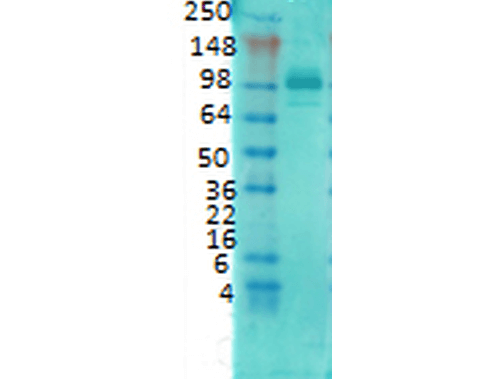 Western Blot analysis of Rat brain membrane lysate showing detection of PSD95 protein using Mouse Anti-PSD95 Monoclonal Antibody, Clone 6G6 (56452). Primary Antibody: Mouse Anti-PSD95 Monoclonal Antibody (56452) at 1:1000.
 - -
- -
Antibody DetailsProduct DetailsReactive Species Bovine ⋅ Mouse ⋅ Rat Host Species Mouse Immunogen Recombinant rat PSD95 Product Concentration Lot Specific Formulation PBS, pH 7.4. State of Matter Liquid Product Preparation Purified by Protein G affinity chromatography Storage and Handling This antibody is stable for at least one (1) year at -20°C. Avoid repeated freezing and
thawing. Regulatory Status For in vitro investigational use only. Not for
use in therapeutic or diagnostic procedures. Country of Origin USA Shipping Next Day 2-8°C Applications and Recommended Usage? Quality Tested by Leinco Immunoblotting: use at 4ug/mL. A band of ~100 kDa is detected.
Immunocytochemistry: use at 3-15ug/mL These are recommended concentrations. User should determine optimal concentrations for their application. Positive control: Rat brain tissue Each investigator should determine their own optimal working dilution for specific applications. See directions on lot specific datasheets, as information may periodically change. DescriptionDescriptionSpecificity This antibody recognizes mouse, rat, and
bovine PSD95. Background Postsynaptic Density Protein 95 (PSD95), also known as Synapse Associated Protein 90kDa, is a member of the membrane- associated guanylate kinase family of proteins. PSD95 is a scaffolding protein involved in the assembly and function of the postsynaptic density complex. This family of proteins consists of N-terminal variable segments followed by three amino-terminal PDZ domains, an upstream SH3 domain, and an inactive carboxy-terminal guanylate kinase domain. The first and second PDZ domains localize NMDA receptors and K+ channels to synapses, and the third binds to neuroligins, neuronal cell adhesion molecules. PSD95 also binds to neuronal nitric oxide synthase. PSD95 is implicated in experience-dependent plasticity and plays an indispensable role in learning. Mutations in PSD95 are associated with autism. Function Postsynaptic scaffolding protein that plays a critical role in synaptogenesis and synaptic plasticity by providing a platform for the postsynaptic clustering of crucial synaptic proteins (PubMed:15317815, PubMed:15358863, PubMed:19596852, PubMed:23300088, PubMed:26679993). Interacts with the cytoplasmic tail of NMDA receptor subunits and shaker-type potassium channels. Required for synaptic plasticity associated with NMDA receptor signaling. Overexpression or depletion of DLG4 changes the ratio of excitatory to inhibitory synapses in hippocampal neurons. May reduce the amplitude of ASIC3 acid-evoked currents by retaining the channel intracellularly. May regulate the intracellular trafficking of ADR1B (By similarity). Also regulates AMPA-type glutamate receptor (AMPAR) immobilization at postsynaptic density keeping the channels in an activated state in the presence of glutamate and preventing synaptic depression (PubMed:19596852).Under basal conditions, cooperates with FYN to stabilize palmitoyltransferase ZDHHC5 at the synaptic membrane through FYN-mediated phosphorylation of ZDHHC5 and its subsequent inhibition of association with endocytic proteins (By similarity). {UniProtKB:P78352, UniProtKB:Q62108, PubMed:15317815, PubMed:15358863, PubMed:19596852, PubMed:23300088, PubMed:26679993}. NCBI Gene Bank ID UniProt.org Research Area Neuroscience References & CitationsTechnical ProtocolsICC IF   AM Certificate of Analysis |
Formats Available
 Products are for research use only. Not for use in diagnostic or therapeutic procedures.
