



Data
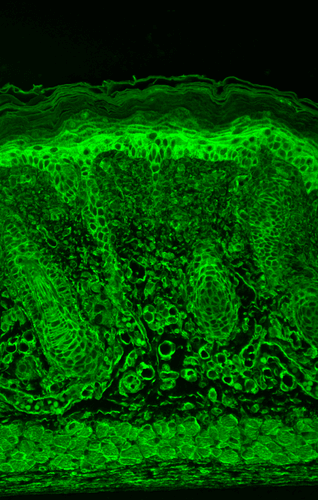 Immunohistochemistry analysis using Mouse Anti-HIF1 alpha Monoclonal Antibody, Clone ESEE122 (34039). Tissue: backskin. Species: Mouse. Fixation: Bouin’s Fixative and paraffin-embedded. Primary Antibody: Mouse Anti-HIF1 alpha Monoclonal Antibody (34039) at 1:100 for 1 hour at RT. Secondary Antibody: FITC Goat Anti-Mouse (green) at 1:50 for 1 hour at RT. Localization: Membranous and cytoplasmic localization in the epidermis, positive hair follicles, muscle and dermis. .
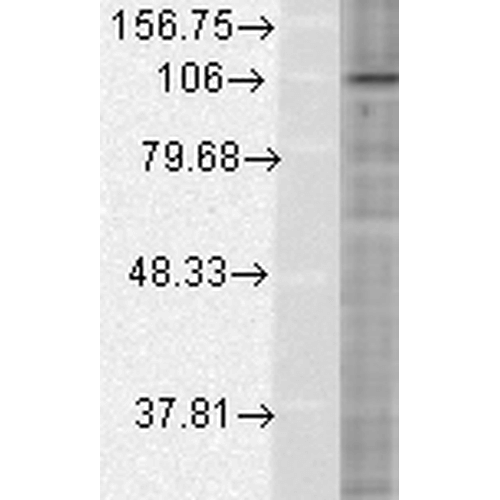 Western Blot analysis of Human Cervical cancer cell line (HeLa) lysate showing detection of HIF1 alpha protein using Mouse Anti-HIF1 alpha Monoclonal Antibody, Clone ESEE122 (34039). Load: 15 µg. Block: 1.5% BSA for 30 minutes at RT. Primary Antibody: Mouse Anti-HIF1 alpha Monoclonal Antibody (34039) at 1:500 for 2 hours at RT. Secondary Antibody: Sheep Anti-Mouse IgG: HRP for 1 hour at RT.
 - -
- -
Antibody DetailsProduct DetailsReactive Species Human Host Species Mouse Immunogen Recombinant protein corresponding to aa 329-530 of human HIF-1a. Product Concentration Lot Specific Formulation PBS, pH 7.4; 50% glycerol, 0.09% sodium azide. Purified by Protein G affinity chromatography. State of Matter Liquid Product Preparation Purified by Protein G affinity chromatography Storage and Handling This antibody is stable for at least one (1) year at -20°
C. Store in appropriate aliquots to avoid
multiple freeze-thaw cycles. Regulatory Status For in vitro investigational use only. Not intended for use in therapeutic or diagnostic procedures. Country of Origin USA Shipping Next Day 2-8°C Applications and Recommended Usage? Quality Tested by Leinco Immunoblotting: use at 2ug/mL. Predicted molecular weight ~116kDa.This is a recommended concentration.
Endusers should determine optimal concentrations for their applications. Each investigator should determine their own optimal working dilution for specific applications. See directions on lot specific datasheets, as information may periodically change. DescriptionDescriptionSpecificity This antibody recognizes human, mouse, rat, and bovine HIF-1alpha. Background Hypoxia-inducible factor 1 (HIF-1) is a heterodimeric transcription factor that regulates the transcription of a broad range of genes that facilitate responses to hypoxia including genes that regulate angiogenesis, erythropoiesis, cell cycle, metabolism, and apoptosis. HIF-1 is comprised of two subunits, HIF-1alpha and HIF-1beta. The widely expressed HIF-1alpha is degraded rapidly in normoxic cells by the ubiquitin/proteasomal pathway. HIF-1alpha is proline hydroxylated leading to a conformational change that promotes binding to the von Hippel Lindau protein (VLH)-E3 ligase complex; ubiquitination and proteasomal degradation follows. Function Functions as a master transcriptional regulator of the adaptive response to hypoxia (PubMed:15225651, PubMed:17981124, PubMed:22009797). Under hypoxic conditions, activates the transcription of over 40 genes, including erythropoietin, glucose transporters, glycolytic enzymes, vascular endothelial growth factor, HILPDA, and other genes whose protein products increase oxygen delivery or facilitate metabolic adaptation to hypoxia (PubMed:15225651, PubMed:17981124, PubMed:22009797). Plays an essential role in embryonic vascularization, tumor angiogenesis and pathophysiology of ischemic disease (PubMed:22009797). Heterodimerizes with ARNT; heterodimer binds to core DNA sequence 5'-TACGTG-3' within the hypoxia response element (HRE) of target gene promoters (PubMed:26245371). Activation requires recruitment of transcriptional coactivators such as CREBBP and EP300. Activity is enhanced by interaction with NCOA1 and/or NCOA2. Interaction with redox regulatory protein APEX1 seems to activate CTAD and potentiates activation by NCOA1 and CREBBP. Involved in the axonal distribution and transport of mitochondria in neurons during hypoxia (By similarity). {UniProtKB:Q16665, PubMed:15225651, PubMed:17981124, PubMed:22009797, PubMed:26245371}. NCBI Gene Bank ID UniProt.org Research Area Cancer Research References & CitationsEspinosa I et al. 2008 Am J Surg Pathol 32: 210-218. Lee CH et al. 2010 Adv Anat Pathol 17: 222-232. Not for use in diagnostic or therapeutic procedures. Technical Protocols ICC IF   Certificate of Analysis |
Formats Available
 Products are for research use only. Not for use in diagnostic or therapeutic procedures.
