

Anti-Phenytoin [Clone PY25-500.1]


Anti-Phenytoin [Clone PY25-500.1]
Product No.: 16304
- -
- -
Clone PY25-500.1 Target Phenytoin Formats AvailableView All Product Type Monoclonal Alternate Names diphenylhydantoin Isotype Mouse IgG1 Applications ELISA |
Data
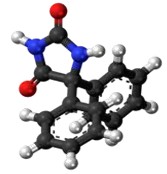 Phenytoin
 - -
- -
Antibody DetailsProduct DetailsReactive Species Phenytoin Host Species Mouse Immunogen Phenytoin-KLH. Product Concentration Lot Specific Formulation This monoclonal antibody is formulated in phosphate buffered saline (PBS) pH 7.2 - 7.4 with no carrier protein or preservatives added. State of Matter Liquid Product Preparation Antibodies are purified by a multi-step process including the use of protein A or G to assure extremely low levels of endotoxins, leachable protein A or aggregates. Storage and Handling This antibody is stable for at least one (1) year at -20°C to -70°C. Store product in appropriate aliquots to avoid multiple freeze-thaw cycles. Country of Origin USA Shipping Next Day 2-8°C Applications and Recommended Usage? Quality Tested by Leinco These antibodies have been qualified for use in ELISA to detect phenytoin. Each investigator should determine their own optimal working dilution for specific applications. See directions on lot specific datasheets, as information may periodically change. DescriptionDescriptionSpecificity This antibody recognize phenytoin and has 128% cross-reactivity with 5-(hydroxyphenyl)-5-phenylhydantoin. Background Anti-Phenytoin [Clone PY25-500.1] antibody, key contextual and technical points can be incorporated. Phenytoin (also known as diphenylhydantoin) is a widely used anti-seizure medication that operates by stabilizing neuronal membranes and limiting repetitive firing of action potentials in the motor cortex. It achieves this primarily through modulation of voltage-gated sodium channels, binding preferentially to the inactive state and thereby providing a use-dependent block that prevents the spread of seizure activity in the central nervous system. Phenytoin is also utilized in select cardiac arrhythmia cases and neuropathic pain, qualifying it for the World Health Organization's List of Essential Medicines. Its metabolism is primarily mediated by hepatic enzymes, especially CYP2C9 and CYP2C19, making pharmacogenetics relevant for dosing decisions due to non-linear (saturable) drug clearance at higher doses. For preclinical and diagnostic research, anti-phenytoin antibodies enable immunochemical detection of this drug, especially in ELISA and related immunoassays. Such assays commonly exploit the competitive binding principle—measuring phenytoin levels by competition for antibody binding sites between labeled and unlabeled drug (as an example, phenytoin-labeled glucose-6-phosphate dehydrogenase in clinical test kits). This type of antibody (mouse monoclonal) is validated for high specificity, though some cross-reactivity with phenytoin metabolites like 5-(hydroxyphenyl)-5-phenylhydantoin may occur, a common characteristic of anti-phenytoin clones. Research Area Drugs References & CitationsTechnical Protocols Certificate of Analysis |
Formats Available
 Products are for research use only. Not for use in diagnostic or therapeutic procedures.
