

Anti-ROR2 [Clone ROR2 2535-2835]


Anti-ROR2 [Clone ROR2 2535-2835]
Product No.: 34045
Data
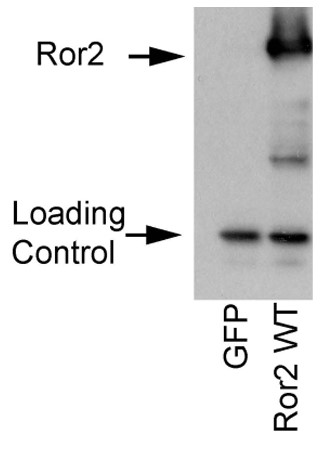 Immunoblotting: use at 1-10ug/ml. A band of ~105kDa is detected.
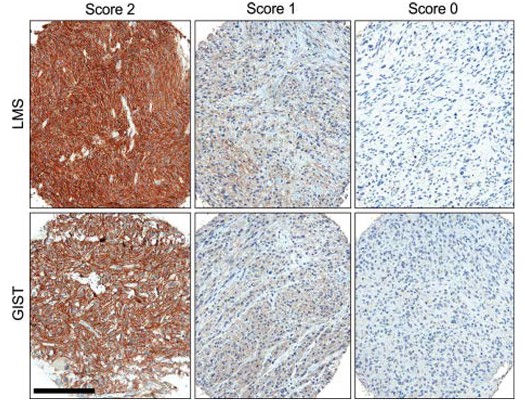 Immunohistochemistry: use at 1-10ug/ml on paraformaldehyde-fixed, paraffin-embedded sections following antigen retrieval (microwave 12 min in citrate buffer, pH 6.0). Detection of ROR2 in LMS and GIST. Samples were scored 2 (strong staining), 1 (weak staining), or 0 (absence of staining). See reference Edris B. et al.
- -
- -
Antibody DetailsProduct DetailsReactive Species Human ⋅ Mouse Host Species Mouse Immunogen Bases 2535-2835 of mouse ROR2 fused in-frame to MBP and expressed in E. coli. Product Concentration Lot Specific Formulation This monoclonal antibody is formulated in phosphate buffered saline (PBS) pH 7.2 - 7.4 with no carrier protein or preservatives added. State of Matter Liquid Product Preparation Antibodies are purified by a multi-step process including the use of protein A or G to assure extremely low levels of endotoxins, leachable protein A or aggregates. Storage and Handling This antibody is stable for at least one (1) year at -20°C. Store product in appropriate aliquots to avoid multiple freeze-thaw cycles. Country of Origin USA Shipping Next Day 2-8°C Applications and Recommended Usage? Quality Tested by Leinco Immunoblotting: use at 1-10ug/mL. A band of ~105kDa is detected.
Immunohistochemistry: use at 1-10ug/mL on paraformaldehyde-fixed, paraffin-embedded sections following antigen retrieval (microwave 12 min in citrate buffer, pH 6.0). These are recommended concentrations. Enduser should determine optimal concentrations for their application. Each investigator should determine their own optimal working dilution for specific applications. See directions on lot specific datasheets, as information may periodically change. DescriptionDescriptionSpecificity Mouse and human ROR2. Does not cross-react with ROR1. Background Receptor tyrosine kinases (RTKs) are cell surface receptors that regulate normal cellular processes through ligand-controlled tyrosine kinase activity. ROR2 is a membrane-bound RTK that is activated by Wnt signaling during normal bone and cartilage development. Recently, ROR2 has been shown to have pro-tumorigenic effects in osteosarcoma, melanoma, and renal cell carcinoma cell lines. ROR2 levels have also been described in soft-tissue sarcomas; specifically, in vitro studies revealed that invasive abilities of leiomyosarcoma (LMS) and gastrointestinal stromal tumor (GIST) are affected by ROR2 expression, and suppression of ROR2 reduces in vivo tumor mass in a xenotransplantation model of LMS. Function Tyrosine-protein kinase receptor which may be involved in the early formation of the chondrocytes. It seems to be required for cartilage and growth plate development (By similarity). Phosphorylates YWHAB, leading to induction of osteogenesis and bone formation (PubMed:17717073). In contrast, has also been shown to have very little tyrosine kinase activity in vitro. May act as a receptor for wnt ligand WNT5A which may result in the inhibition of WNT3A-mediated signaling (PubMed:25029443). {UniProtKB:Q9Z138, PubMed:17717073, PubMed:25029443}. NCBI Gene Bank ID UniProt.org Research Area Cancer Research References & Citations1) Mikels A et al. 2009 J Biol Chem 284: 30167-30176. 2) Wright TM et al. 2009 Oncogene 28: 2513-2523. 3) Edris B et al. 2012 J Pathol 227: 223-233 4) ROR1 is upregulated in endometrial cancer and represents a novel therapeutic target. Sci Rep (2020) [32807831] Technical Protocols  Certificate of Analysis |
Formats Available
 Products are for research use only. Not for use in diagnostic or therapeutic procedures.