



Data
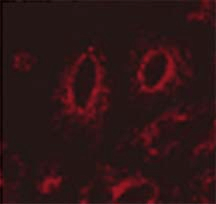 Immunocytochemistry/Immunofluorescence analysis using Mouse Anti-LAMP1 Monoclonal Antibody, Clone Ly1C6 (56270). Tissue: transfected HeLa cells. Species: Human. Primary Antibody: Mouse Anti-LAMP1 Monoclonal Antibody (56270) at 1:1000. Secondary Antibody: APC Goat Anti-Mouse (red). Courtesy of: Robert H Edwards, U. of Cali, San Fran School of Medicine.
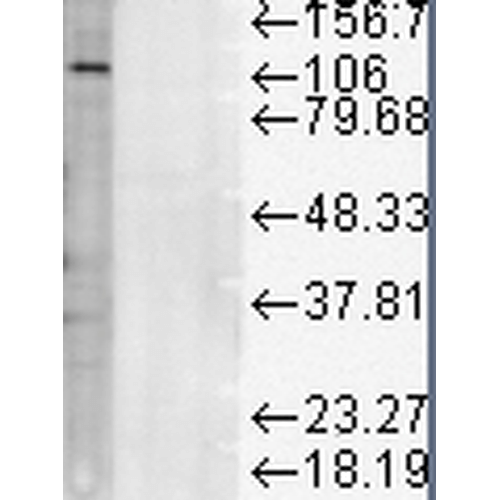 Western Blot analysis of Rat liver microsome lysate showing detection of LAMP1 protein using Mouse Anti-LAMP1 Monoclonal Antibody, Clone Ly1C6 (56270). Load: 15 µg. Block: 1.5% BSA for 30 minutes at RT. Primary Antibody: Mouse Anti-LAMP1 Monoclonal Antibody (56270) at 1:1000 for 2 hours at RT. Secondary Antibody: Sheep Anti-Mouse IgG: HRP for 1 hour at RT.
- -
- -
Antibody DetailsProduct DetailsReactivity Species Hamster ⋅ Rat Host Species Mouse Immunogen Rat liver lysosome membranes. Product Concentration Lot Specific Formulation pH 7.4, purified by Protein G affinity chromatography, 0.09% sodium azide, 50% glycerol. State of Matter Liquid Product Preparation Purified by Protein G affinity chromatography Storage and Handling This antibody is stable for at least one (1) year at -20°C.Avoid repeated freezing and thawing. Regulatory Status For in vitro investigational use only. Not for use in therapeutic or diagnostic procedures. Country of Origin USA Shipping Next Day 2-8°C Applications and Recommended Usage? Quality Tested by Leinco Immunoblotting: Use at 1ug/mL. A band of ~120kDa is detected.
Immunocytochemistry: Use at 5-10ug/mL. These are recommended concentrations. Enduser should determine optimal concentrations for their application. Each investigator should determine their own optimal working dilution for specific applications. See directions on lot specific datasheets, as information may periodically change. DescriptionSpecificity This antibody recognizes human, rat, and hamster LAMP1.Accession no.: NP_036989.1 Gene ID: 25328 Background Lysosome-associated membrane proteins (LAMP1 and LAMP2) are major constituents of the lysosomal membrane. The structures of these two proteins are closely related with 37% sequence homology. Both are transmembrane glycoproteins localized primarily in lysosomes and late endosomes. Cell surface LAMP1 and LAMP2 promote adhesion of human peripheral blood mononuclear cells (PBMC) to vascular endothelium which suggests that they are involved in adhesion of PBMC at sites of inflammation. Antigen DetailsFunction Lysosomal membrane glycoprotein which plays an important role in lysosome biogenesis, autophagy, and cholesterol homeostasis (By similarity). Plays also an important role in NK-cells cytotoxicity. Mechanistically, participates in cytotoxic granule movement to the cell surface and perforin trafficking to the lytic granule. In addition, protects NK-cells from degranulation-associated damage induced by their own cytotoxic granule content. Presents carbohydrate ligands to selectins. Also implicated in tumor cell metastasis (By similarity). {UniProtKB:P11279, UniProtKB:P11438}. NCBI Gene Bank ID UniProt.org Research Area Cell Adhesion References & CitationsLewis V et al. 1985. J Cell Biol 100: 1839-1847. Technical ProtocolsICC IF   |
Formats Available
 Products are for research use only. Not for use in diagnostic or therapeutic procedures.