

Anti-Rhodopsin Antibody (56474)


Anti-Rhodopsin Antibody (56474)
Product No.: 56474
Data
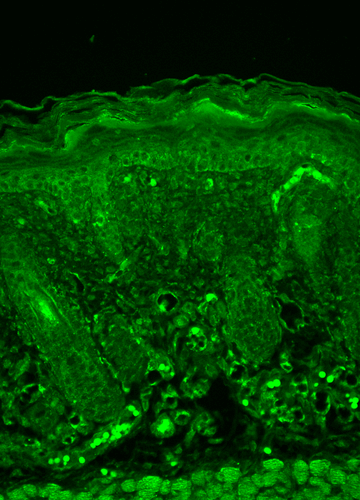 Immunohistochemistry analysis using Mouse Anti-Rhodopsin Monoclonal Antibody, Clone 1D4 (56474). Tissue: backskin. Species: Mouse. Fixation: Bouin’s Fixative and paraffin-embedded. Primary Antibody: Mouse Anti-Rhodopsin Monoclonal Antibody (56474) at 1:100 for 1 hour at RT. Secondary Antibody: FITC Goat Anti-Mouse (green) at 1:50 for 1 hour at RT. Localization: Dull epidermal staining.
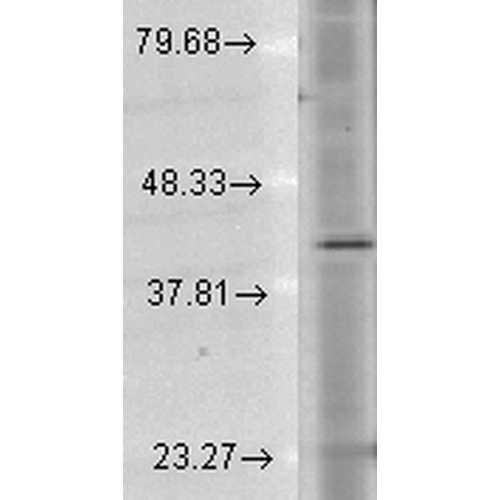 Western Blot analysis of Human Cell lysates showing detection of Rhodopsin protein using Mouse Anti-Rhodopsin Monoclonal Antibody, Clone 1D4 (56474). Load: 15 µg. Block: 1.5% BSA for 30 minutes at RT. Primary Antibody: Mouse Anti-Rhodopsin Monoclonal Antibody (56474) at 1:1000 for 2 hours at RT. Secondary Antibody: Sheep Anti-Mouse IgG: HRP for 1 hour at RT.
 - -
- -
Antibody DetailsProduct DetailsReactive Species Vertebrate Host Species Mouse Immunogen Bovine rhodopsin Product Concentration Lot Specific Formulation PBS, pH 7.4; 50% glycerol, 0.09% sodium azide. State of Matter Liquid Product Preparation Purified by Protein G affinity chromatography Storage and Handling This antibody is stable for at least one (1) year at -20°C. Avoid repeated freezing
and thawing. Regulatory Status For in vitro investigational use only. Not for
use in therapeutic or diagnostic procedures. Country of Origin USA Shipping Next Day 2-8°C Applications and Recommended Usage? Quality Tested by Leinco Immunoblotting: use at 1-10ug/mL. A band of ~40kDa is detected.Immunohistochemistry/immunocyto- chemistry: use at 1-10ug/mL
Immunoprecipitation: use at 1-2ug per 100-500ug of protein. These are recommended concentrations. User should determine optimal concentrations for their application. Positive control: Rat eye lysate Each investigator should determine their own optimal working dilution for specific applications. See directions on lot specific datasheets, as information may periodically change. DescriptionDescriptionSpecificity This antibody recognizes the C-terminal
aa TETSQVAPA(COOH) of native and
recombinant vertebrate rhodopsin. Background Rhodopsin is comprised of the protein opsin and a reversibly covalently bound cofactor, retinal. Opsin, made up of seven membrane-embedded alpha helices, binds retinal, a photoreactive chromophore, in a central pocket. In addition to being the pigment of the retina that is responsible for the formation of photoreceptor cells, rhodopsin conveys information stored in the chromophore to the surface of the molecule upon light absorption. Mutations in the rhodopsin gene lead to retinitis pigmentosa. Function Photoreceptor required for image-forming vision at low light intensity. Required for photoreceptor cell viability after birth (By similarity). Light-induced isomerization of 11-cis to all-trans retinal triggers a conformational change that activates signaling via G-proteins (PubMed:10926528, PubMed:12044163, PubMed:11972040, PubMed:16908857, PubMed:16586416, PubMed:17060607, PubMed:17449675, PubMed:18818650, PubMed:21389983, PubMed:22198838, PubMed:23579341, PubMed:25205354, PubMed:27458239). Subsequent receptor phosphorylation mediates displacement of the bound G-protein alpha subunit by the arrestin SAG and terminates signaling (PubMed:1396673, PubMed:15111114). {UniProtKB:P08100, PubMed:1396673, PubMed:16586416, PubMed:16908857, PubMed:17060607, PubMed:17449675, PubMed:18818650, PubMed:21389983, PubMed:22198838, PubMed:23579341, PubMed:25205354, PubMed:27458239, PubMed:10926528, PubMed:11972040, PubMed:12044163, PubMed:15111114, PubMed:26526852}. NCBI Gene Bank ID UniProt.org Research Area Neuroscience References & CitationsTechnical Protocols ICC IF    Certificate of Analysis |
Formats Available
 Products are for research use only. Not for use in diagnostic or therapeutic procedures.
