

Recombinant Chikungunya Envelope Protein E2 (strain SL-CK1)


Recombinant Chikungunya Envelope Protein E2 (strain SL-CK1)
Product No.: C446
Data
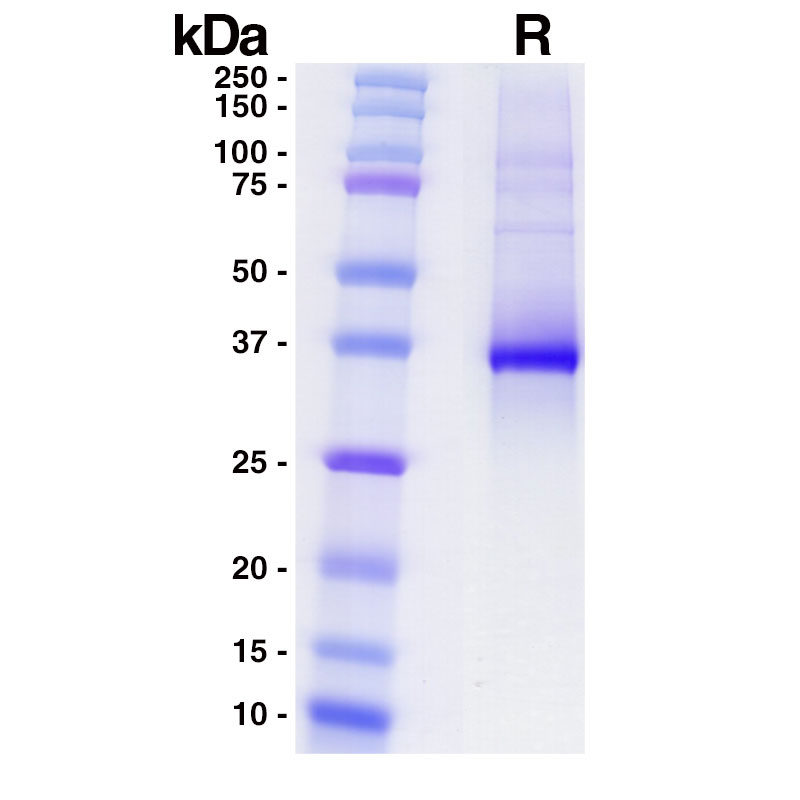 SDS-PAGE
R: 5µg reduced Recombinant Chikungunya E2 protein, (Leinco Prod. No.: C446)
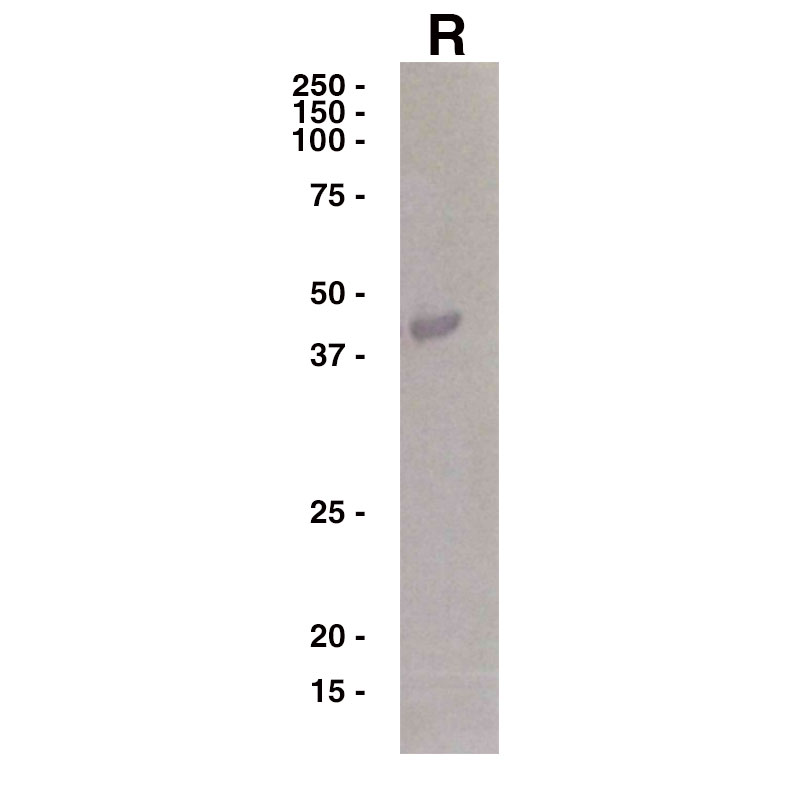 Western Blot
Purified Recombinant Chikungunya E2 protein (Leinco Prod. No.: C446) was separated on SDS-PAGE under reducing conditions and probed with an anti-Chikungunya E2 antibody (Leinco Prod. No.: LT569).
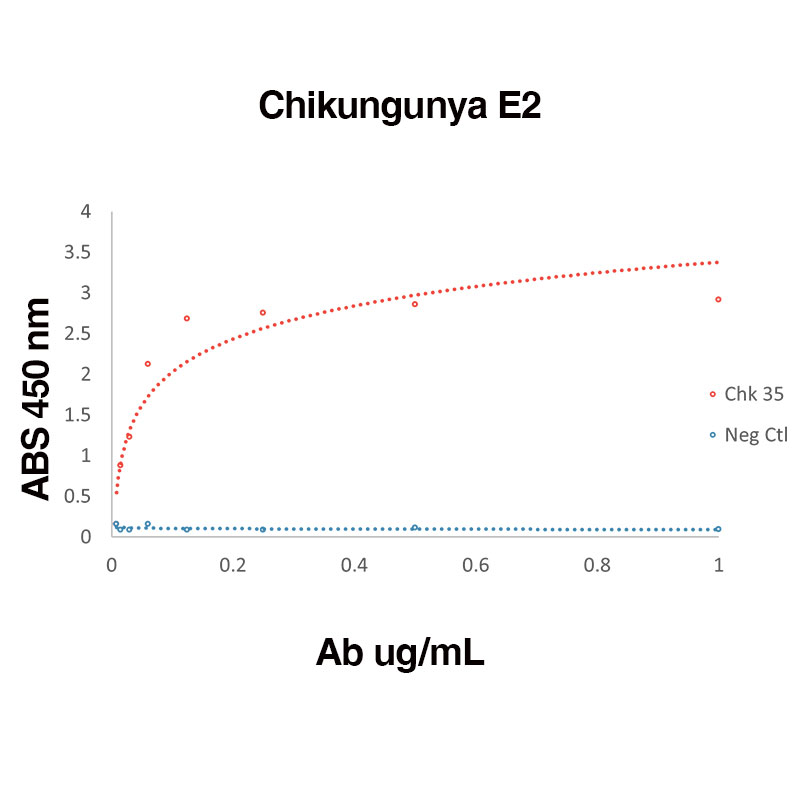 Direct binding of Recombinant anti-Chikungunya E2 antibody (Leinco Prod. No.: LT569) to Chikungunya E2 protein (Leinco Prod. No.: C446).
Binding was measured by ELISA. Chikungunya E2 was immobilized at 1 µg/mL. Anti-Chikungunya E2 antibody was titrated.
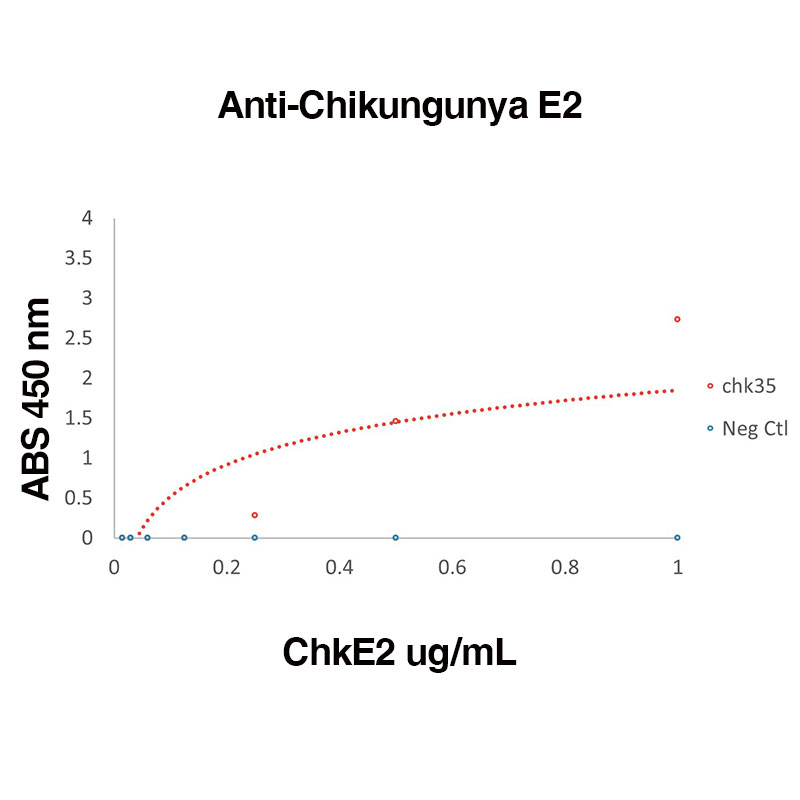 Sandwich ELISA binding of Anti-Chikungunya E2 antibody clone 35 (Leinco Prod. No.: LT569) to Recombinant Chikungunya E2 protein (Leinco Prod. No.: C446).
Binding was measured by Sandwich ELISA. Anti-Chikungunya E2 antibody clone 35, capture reagent, was immobilized at 1 µg/mL. Chikungunya E2 protein was titrated. Anti-Chikungunya E2 antibody clone 35 (Leinco Prod. No.: LT569), detection reagent, was diluted to 1ug/mL.
- -
- -
BackgroundChikungunya virus (CHIKV) is a mosquito-transmitted alphavirus that causes epidemics globally and has been declared a notable disease by the Centers for Disease Control and Prevention1, 2. Symptoms include high fever, myalgia, rash, and severe polyarthritis which can persist for long after acute infection. CHIKV is an enveloped virus with an 11.8-kb single-stranded, positive-sense RNA genome with two open reading frames3, 4. There are three main genotypes, having 95.2 to 99.8% amino acid identity: Asian, West African, and East/Central/South African (ECSA). The mature CHIKV virion is comprised of a nucleocapsid protein C and two glycoproteins, E1 and E2 5. E1 participates in virus fusion. E2 functions in attachment to cells. E1 and E2 form 80 trimeric spikes on the virus surface6. E2 localizes to the top of the spike and contains three domains: N-terminal domain A (center), domain B (tip), and C-terminal domain C (proximal to the viral membrane)5.
The SL-CK1 CHIKV strain was isolated from an epidemic in Sri Lanka in 2007 from a human source and has been fully sequenced (Genbank ID HM045801.1)7. Residue 18 of strain SL-CK1 E2 is a histidine8. This residue is an important determinant of virus fitness in mosquito cells. Soluble recombinant CHIKV E2 protein has been used to generate monoclonal antibodies5. Protein DetailsSpecies Viral Format Purified No Carrier Protein Purity ≥90% by SDS PAGE Endotoxin Level <1.0 EU/µg Protein Accession No. H1ZYM0, H1ZYM0-CHIKV Amino Acid Sequence stkdnfnvykatrpylahcpdcgeghschspvalerirneatdgtlkiqvslqigiktddshdwtklrymdnhmpadaeraglfvrtsapctitgtmghfilarcpkgetltvgftdsrkishscthpfhhdppvigrekfhsrpqhgkelpcstyvqstaatteeievhmppdtpdrtlmsqqsgnvkitvngqtvrykcncggsnegltttdkvinnckvdqchaavtnhkkwqynsplvprnaelgdrkgkihipfplanvtcrvpkarnptvtygknqvimllypdhptllsyrnmgeepnyqeewvmhkkevvltvpteglevtwgnnepykywpq N-terminal Sequence Analysis NP State of Matter Lyophilized SDS-Page Molecular Weight 47 kDa Predicted Molecular Mass 47 kDa Formulation Lyophilized from 0.01M Phosphate Buffered Saline (150mM NaCl)(PBS) pH 7.4, with 5% Trehalose and 10mM DTT Reconstitution Reconstitute at 1mg/ml using filtered 1x PBS. Gently mix by vortexing and/or inversion until fully dissolved. Centrifuge if necessary. Storage and Stability 1 month, 2 to 8 °C. Sterile conditions after opening and reconstitution. 1 year from date of receipt, -20 to -80 °C as supplied 3 months from date of receipt, -20 to -80 °C. Sterile conditions after opening and reconstitution. Country of Origin USA Shipping Ambient Ligand/Receptor Ligand Species Viral Regulatory Status Research Use Only NCBI Gene Bank UniProt.org H1ZYM0 Applications and Recommended Usage ? (Quality Tested by Leinco) ELISA, Western Blot References & Citations1. Barrera, R., Hunsperger, E., Lanciotti, RS. et al. Preparedness and response for chikungunya virus introduction in the Americas. Pan American Health Organization; National Center for Emerging and Zoonotic Infectious Diseases (U.S.). Division of Vector-Borne Diseases. 2011.
2. Silva, JVJ Jr., Ludwig-Begall, LF., Oliveira-Filho, EF. et al. Acta Trop. 188:213-224. 2018. 3. Powers, AM., Brault, AC., Tesh, RB. et al. J. Gen. Virol. 81:471–479. 2000. 4. Arankalle, VA., Shrivastava, S., Cherian, S. et al. J. Gen. Virol. 88:1967–1976. 2007. 5. Pal, P., Dowd, KA., Brien, JD. et al. PLoS Pathog. 9(4):e1003312. 2013. 6. Mukhopadhyay, S., Zhang, W., Gabler, S. et al. Structure. 14(1):63-73. 2006. 7. Volk SM, Chen R, Tsetsarkin KA, et al. J Virol. 84(13):6497-504. 2010. 8. Jupille HJ, Medina-Rivera M, Hawman DW, et al. J Virol. 87(10):5970-84. 2013. Technical Protocols  Certificate of AnalysisIMPORTANT Use lot specific datasheet for all technical information pertaining to this recombinant protein. |
 Products are for research use only. Not for use in diagnostic or therapeutic procedures.
